
But here's the catch: many homeowners can't actually tell a sugar maple from a red maple or a Norway maple. All three have lobed leaves. All three turn colors in fall. The differences matter, though, especially if you're planting one and want to know what you're getting.
This guide breaks down the science behind that famous color change, how to identify a true sugar maple, what to expect as it grows over decades, and how to plant one in your own yard.
Key Takeaways
- Fall color appears when chlorophyll fades and carotenoids, then anthocyanins, show through
- Five lobes and U-shaped notches set sugar maples apart from red and Norway maples
- Slow growers that can live 300+ years—longer than most trees you'll plant
- Well-drained, slightly acidic soil away from road salt decides thrive vs. struggle
The Science Behind Sugar Maple's Spectacular Fall Color
Sugar maple leaves aren't hiding a secret trick. They're revealing one that's been there all along.
During spring and summer, chlorophyll dominates. It's what makes leaves green, and it's so abundant that it masks two other pigments doing supporting work: yellow and orange carotenoids. As daylight shortens in fall, the tree stops producing chlorophyll. The green fades, and the carotenoids that were there the entire growing season finally show through.
Red is a different story entirely. Unlike carotenoids, anthocyanins don't exist in the leaf until autumn. The tree actively produces them as it withdraws nutrients from fading leaves.
A 2003 study on sugar maples found red pigment increasing well before the major green-to-yellow shift, with the most dramatic red expression following an early October frost. Research published in Tree Physiology confirmed that frost alone doesn't trigger this process, though it clearly intensifies it.
Why One Tree Shows Three Colors
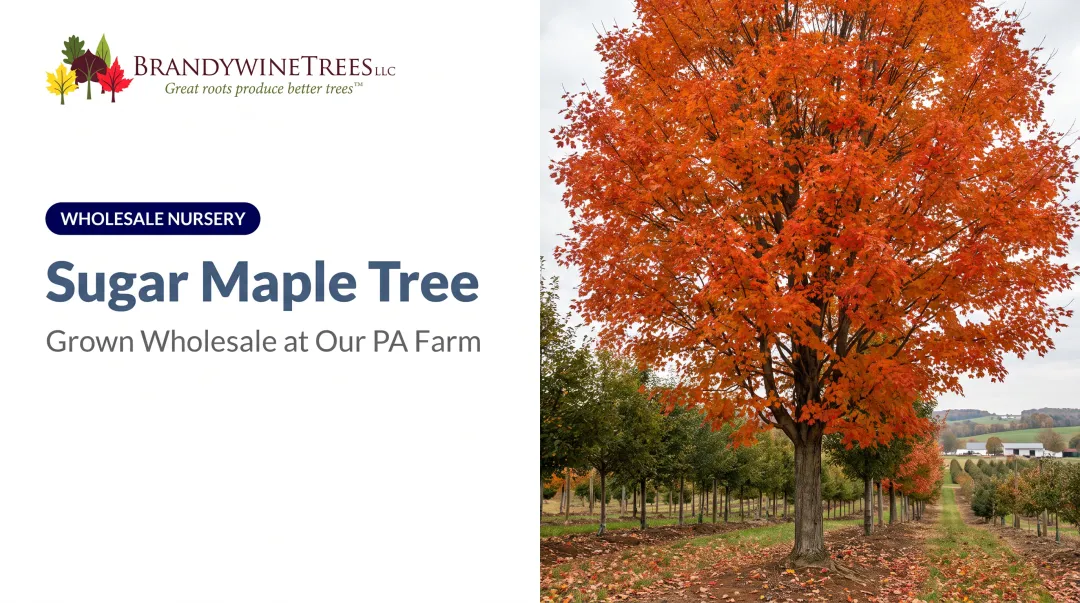
Sugar maples are unusual because they often display yellow, orange, and red-orange simultaneously, sometimes on the very same branch. This happens because anthocyanin production and chlorophyll breakdown don't happen at identical rates across the entire canopy.

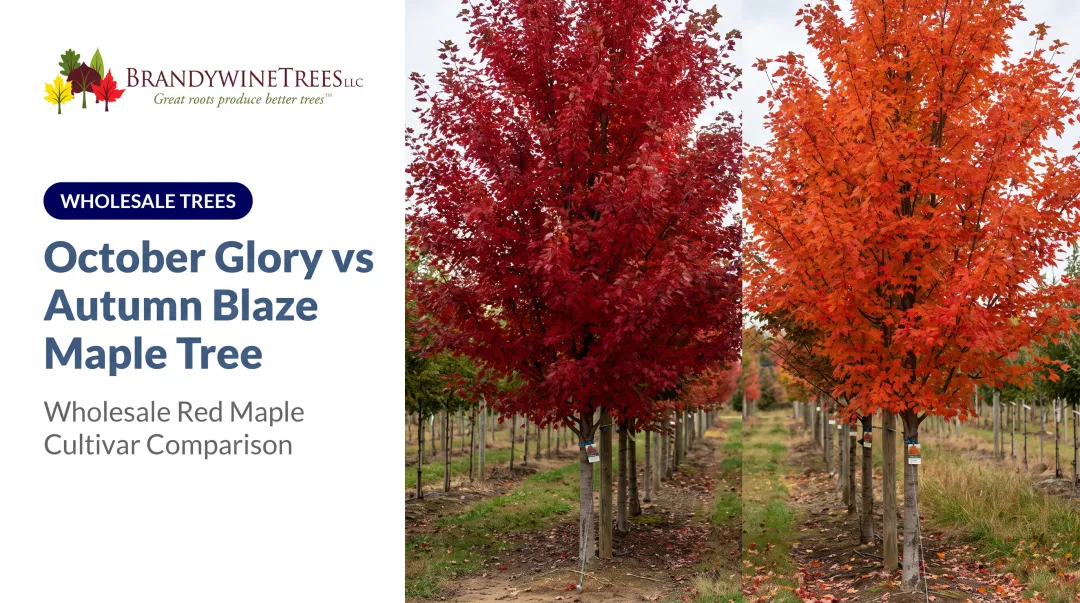
Red maples, by contrast, tend toward a more uniform scarlet or orange-red across the whole tree (though some individual red maples turn yellow instead).
Weather's Role in Color Intensity
Not every fall delivers a great show. Sunny days paired with cool nights produce the most vivid color, according to Michigan State University Extension. Warm days let leaves keep photosynthesizing and producing sugars; cool nights trap those sugars in the leaf, fueling anthocyanin production.
Conditions that dull the display:
- Severe summer drought, which can delay coloring or cause early browning
- Warm fall nights, which inhibit anthocyanin formation
- Excessive rain, which can trigger premature leaf drop before colors peak
One popular claim suggests sugar maples transplanted to Europe never match the vibrancy of trees in native New England and Appalachian forests. It's a compelling idea, and it shows up in university exhibits, but no peer-reviewed study has actually measured or confirmed it. Treat it as folklore worth watching, not settled science.
Peak Color Timing
Sugar maples tend to color earlier than their Norway maple cousins. Norway maples often hold onto green-to-yellow foliage well into late November, long after sugar maples have dropped their leaves. If your street trees are still green in mid-November, you're probably looking at Norway maples, not sugar maples.
How to Identify a Sugar Maple This Fall (And Not Confuse It With Lookalikes)
Misidentification is common when people rely on lobe count alone. Use the leaf shape, sap, bark, and seeds together.
Leaf shape and edges
Sugar maple leaves have five pointed lobes aimed in different directions, separated by smooth U-shaped notches (sinuses). Edges show relatively few teeth compared with red maple.
| Feature | Sugar Maple | Red Maple | Norway Maple |
|---|---|---|---|
| Lobes | 5, pointing different directions | 3, pointing same direction | 5–7, similar shape to sugar |
| Sap at leaf stem | Clear | Clear | Milky when snapped |
| Fall color | Yellow, orange, and red together | Often scarlet, sometimes yellow | Mostly yellow, later in season |
| Peak timing | Early-to-mid fall | Early-to-mid fall | Late November |
The milky sap test
This is the fastest way to rule out Norway maple. Snap a leaf stem (petiole) and squeeze. White latex means Norway maple, not a native sugar maple.
Bark on mature trees
Mature sugar maple bark is gray-brown with long, irregular furrows. Black maple, a close relative, runs nearly black and more deeply furrowed.
Winged seed pods (samaras)
All maples drop paired winged seeds. On sugar maples, the pairs hang downward. Norway maple samaras spread nearly horizontal—an easy tell once you know to check.
Still unsure? A local street-tree map or leaf ID app will confirm faster than a driveway guess.
Sugar Maple Growth Rate, Size, and Lifespan
If you're planting a sugar maple expecting a quick privacy screen, you'll be disappointed. This is a patient tree, built for the long game.
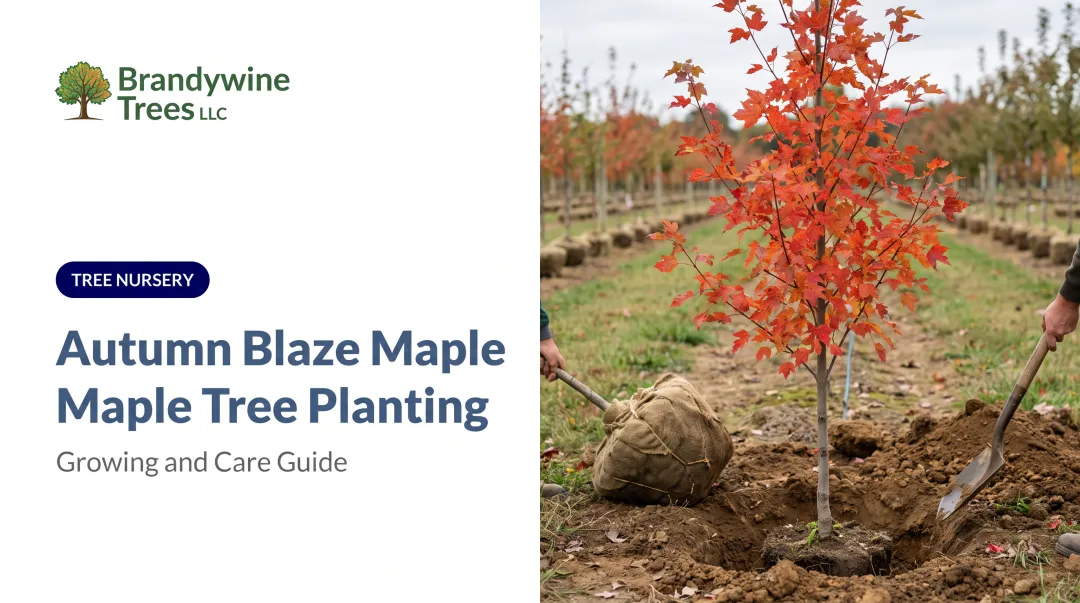
Growth rate: Sugar maples average roughly 12 inches of height growth per year during their first 30 to 40 years, according to USDA Forest Service Silvics of North America. Compare that to Autumn Blaze, a popular fast-growing maple hybrid that can add roughly 2 feet per year—about twice the sugar maple's pace.
Mature size: Given decades, expect:
- Height: 90–120 feet in optimal forest conditions (landscape specimens typically run smaller)
- Trunk diameter: 30–36 inches at breast height in mature stands
- Spread: Broad, rounded crown that needs room away from structures and power lines
Lifespan: This is where sugar maples pull away from most landscape trees.
- Longevity: Healthy specimens routinely live 300 to 400 years
- Growth shift: Height gain slows around age 140–150; diameter keeps increasing for centuries after
Plant one today, and it could still be standing when your great-great-grandchildren are adults—few landscape choices carry that multi-generational weight.

Growing a Sugar Maple in Your Own Landscape
Sugar maples aren't fussy, but they're not indestructible either. Getting the site right from day one determines whether you get decades of vibrant fall color or a struggling tree that never quite thrives.
Ideal growing conditions:
- Light: Full sun to partial shade (seedlings take deeper shade; landscape trees color best with more sun)
- Soil: Rich, well-drained loam
- pH: Slightly acidic, generally in the 5.5 to 7.3 range
- Moisture: Consistent, without standing water or growing-season flooding
The road salt question: Sugar maples are notably sensitive to deicing salt and urban air pollutants like sulfur oxides and chlorides. If you're planting near a street, driveway, or sidewalk that gets salted in winter, pick a spot further back, or pick a different tree. Getting this one call right does more for a residential sugar maple than almost anything else.
Starting With the Right Tree Matters
A lot of sugar maple disappointment traces back to how the tree was grown before it ever reached the yard. Conventional field-dug trees can lose 85% to 90% of their root system during the digging process, a shock many trees never fully recover from.
Sourcing makes a real difference. Brandywine Trees, a Pennsylvania-based wholesale grower in Chester County, grows its sugar maples with a container-based Transplant Ready™ process instead of traditional field-digging.
Trees go through two to three root-pruning pot-up stages over several growing seasons, building dense, fibrous root systems in air-pruning containers. They can arrive with up to 100% of their root system intact.
For homeowners and landscape professionals in the PA/DE region, Brandywine offers Acer saccharum in 10-gallon, 7-8 foot, and 10-12 foot sizes. Trees are grown organically with mycorrhizae added to support root establishment.
Because the nursery propagates over 90% of its own stock, it knows each tree's growth history from seedling forward—detail most retail nurseries can't provide.

Fall Care Tips to Keep Your Sugar Maple Thriving
Once your sugar maple is in the ground, fall care sets the stage for how well it survives winter.
Water deeply through early fall. Newly planted trees especially need consistent moisture right up until the ground freezes. If your area gets less than an inch of rain over a 5-7 day stretch, water deeply at the drip line rather than against the trunk.
Mulch, but don't smother. Apply 3-4 inches of organic mulch around the base to regulate soil temperature and lock in moisture before frost. Leave a 2-4 inch gap between the mulch and the trunk itself. Keep it clear of the bark and the trunk stays dry.
Watch for stress signals:
- Yellowing then browning along leaf margins
- Curling leaves or drop ahead of neighboring trees
- One-sided color change (often salt exposure or something in the root zone)
These signs don't point to one cause on their own. Early color change can follow a dry spell, salt exposure, or something in the root zone. If something looks off, call a certified arborist instead of guessing.
Frequently Asked Questions
How fast do sugar maple trees grow?
Sugar maples are slow-to-moderate growers, averaging about 12 inches of height growth annually during their first 30-40 years. With good soil and steady moisture, young trees may put on closer to 18–24 inches in a strong year.
What is the average lifespan of a sugar maple tree?
Healthy sugar maples commonly live 300 to 400 years. Height growth slows around age 140-150, but the trunk keeps thickening for centuries.
How can I identify a sugar maple tree?
Look for five pointed lobes with U-shaped notches between them, plus fall foliage that displays yellow, orange, and red simultaneously. Clear (not milky) sap at the leaf stem rules out Norway maple.
What is the best time to plant a sugar maple tree?
Fall and early spring are both strong planting windows, giving roots time to establish before summer heat. Sourcing Transplant Ready™ trees from a grower like Brandywine Trees—with intact root systems—supports faster establishment in either season.
Why do sugar maple leaves turn different colors on the same tree?
Chlorophyll breaks down at slightly different rates across the canopy, unmasking carotenoids unevenly while anthocyanins form simultaneously in other spots. That overlap produces yellow, orange, and red all on one tree at once.
Can sugar maples grow well in urban or coastal areas?
Not ideally. Sugar maples are highly sensitive to road salt and air pollution, making them better suited to residential yards set back from heavily salted streets and sidewalks.