
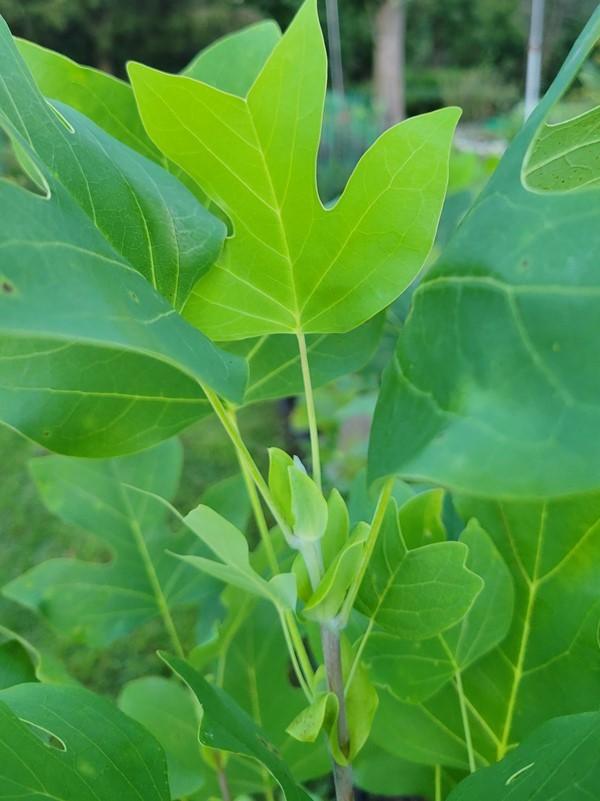
Liriodendron tulipifera, “Tulip Tree”
$159.00
Liriodendron tulipifera, “Tulip Tree” is a fast growing, native shade tree known for its colorful flowers and straight trunks. This tree has green to yellow orange flowers in May to June. It is a low maintenance tree that can grow in full sun and in clay and medium wet soils. It attracts, birds including hummingbirds.
Liriodendron tulipifera, “Tulip Tree” is a tall, fast growing, native shade tree known for its colorful flowers and straight trunks. This tree has green to yellow orange flowers in May to June. It is a low maintenance tree that can grow in full sun and in clay and medium wet soils. It attracts, birds including hummingbirds.
Related products
Shade Trees
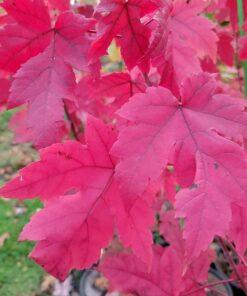
Autumn Blaze maple is an excellent and very popular Red & Silver Maple hybrid is an upright, fast-growing, deciduous shade tree with outstanding blazing fall colors. It is one of the very best autumn and fall color maple trees. This variety is fast growing, tolerates clay, and wet soils. You will be very happy with these spectacular trees!
Wetland Trees
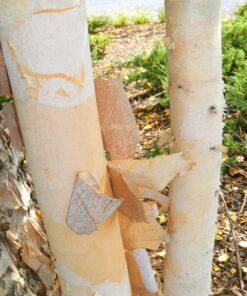
River Birch, 'Heritage'is a special cultivar with white and peach colored exfoliating bark. Please note that we sell the single trunk version only and these particular trees can grow up to 3' - 4' per year. They are hardy, more resistant to insects and disease, are well adapted to wet soils, and are fast growing. They also provide some screening with their branching.
Flowering Trees
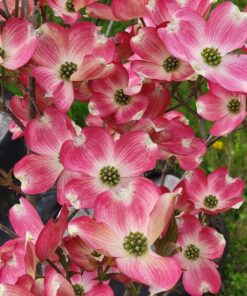
Cherokee Brave is an outstanding deep pink flowering Dogwood with great beauty and strong disease resistance. It is a hardy and proven performer among dogwoods. These trees bloom in April, and are one of the earliest bloomers. It is one of the deepest and most striking pink dogwoods available. It is highly recommended!
Privacy Trees
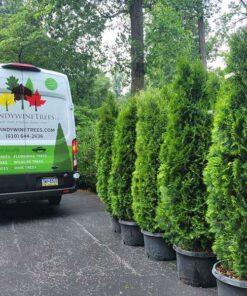
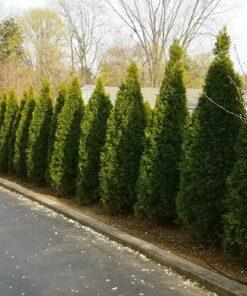
The Emerald Green Arborvitae is a beautiful and very popular upright evergreen privacy tree. It will dress up your walkway, property line, or driveway. This Emerald Green arborvitae will give you your privacy, comfort, and your peace-of-mind back! It maintains an upright vertical pyramidal form and is best to plant 24-30 inches apart (trunk-to-trunk) to create that tight 'quick privacy wall' that all customers want! Please note that these Emerald Green arborvitae are Not deer resistant like the green giant arborvitae if you have a heavy deer population. Feel free to contact us if you have questions.
All Trees
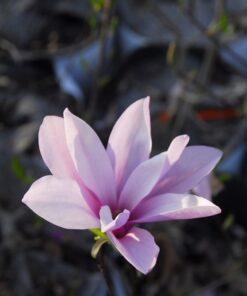
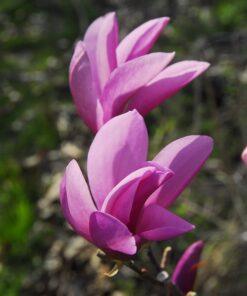
This is a mid spring blooming, moderate-growing Magnolia with beautiful flowers. Plant with protection from harsh winds and enjoy this gorgeous tree! It is a beautiful beckoning welcome to spring
Small Trees
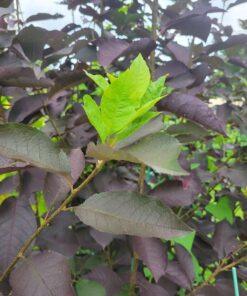
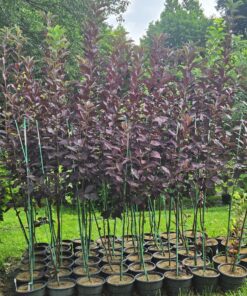
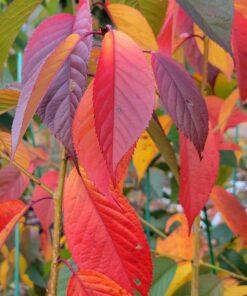
Prunus virginiana 'Canada Red' Chokeberry is a fast growing smaller native shade tree full of colorful red/ burgundy leaves, which is a great contrast to the many green leafed trees. The abundant small fruits are also red, and are a favorite of songbirds. It is a clean tree, and the fruits are retained on stem by the tree, and the birds eat the fruits while on the tree. Prunus virginiana Chokeberry is a brilliant and colorful performer. The Chokeberry tree is a wildlife tree attracting songbirds with its abundant small fruits. In addition, it is a pollinator tree, and will attract butterflies. This is a handsome small tree that contrasts and fits in nicely with other green foliage trees. You cannot go wrong with this tree, and it has many great attributes. Highly recommended!
Flowering Trees
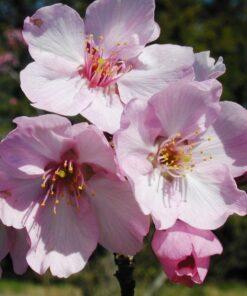
The Helen Taft Cherry tree is a fantastic flowering cherry tree variety named after a female trailblazer in the early 1900's who also happened to be the wife of President Howard Taft. She was one of the key people who helped create the Cherry Blossom arboretum along the Potomac river bordering Washington DC and Virginia. This specimen is a outstanding flowering tree specimen, and would look great in a grouping, or in a tree line! It is a deciduous upright tree with a spreading crown, reaching both a height and width of 20' x 25'+ after 25 years of growth. We find that this tree is very hardy with minimal problems with insects and disease. It is most comparable to its female parent, Prunus x yedoensis Yoshino, except for its slightly larger size and noticeably large pink flowers. This tree is a true winner, and we are quite impressed with its many positive characteristics. It is Highly recommended!
Shade Trees
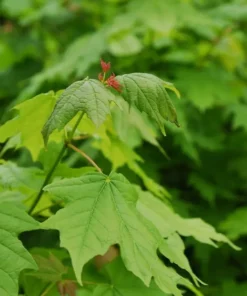
Sugar maple tree is a grand American native tree that puts on a spectacular fall display of yellow and orange leaves in the fall. It is truly an American favorite tree known for it beauty, summer shade, and gorgeous fall colors! It is well recognized especially in the Northeast US, and is the tree that creates the sap for Maple syrup. Explore the beauty and shade of the sugar maple tree, an iconic American native known for its vibrant autumn leaves. We get a lot of requests for this tree, and it is one of our favorites too. Limited availability.